Full structural restoration for severely corroded and historic fire escapes.
NYC Fire Escape Painting experts rebuild systems that pass fire escape inspections, meet LPC requirements, and last for decades.
Fire Escape Repair fixes isolated issues like a loose railing, a small rust patch, or a damaged tread. Contrarily, restoration addresses the entire structure, including system dismantling, component fabrication to original specifications, metal treatment to bare steel, and reinstallation with a compliant connection. All of these are important for aging cast-iron and wrought-iron assemblies found on pre-war fire escapes.
Fire escape restoration becomes necessary when corrosion spreads across multiple components, prior repairs keep failing inspection, or a landmarked building requires LPC-reviewed work that patch repairs cannot satisfy. It is a long-term compliance investment that prevents repeat violations and ongoing repair costs while preserving the integrity of historic ironwork.
You need a fire escape restoration service if you are any of the following:
The New York City Landmarks Preservation Commission regulates exterior changes on designated landmarks and buildings located within historic districts. Many brownstones, tenements, and pre-war apartment houses across Manhattan and Brooklyn fall under this jurisdiction.
All exterior alterations require LPC approval before work begins. It reviews if the work preserves the historic appearance of the building, applying the following two approval paths:
The Landmark Preservation Commission often requires original iron profiles, period-appropriate fabrication, and approved coating finishes. Performing restoration on a landmarked building without its approval can result in stop-work orders, fines, and mandatory removal of completed work.
Our team prepares and submits the application and coordinates this with the New York City Department of Buildings (DOB) filing process.
A licensed inspector evaluates platforms, stringers, railings, anchor points, and welds. We photograph all findings and produce a written scope before work begins.
We prepare and submit the LPC package, including materials and finish details, for approval.
Our team dismantles the structure, restores salvageable ironwork, and fabricates damaged components to match original profiles.
We mechanically clean steel to bare metal, apply rust-inhibiting primer and approved finish coatings, and never paint over corrosion.
Our OSHA certified experts reinstall using new machine bolts meeting 1 RCNY §15-10 standards, torque-test, and photograph every connection.
We file all required documents with DOB and provide the owner with a full compliance package.
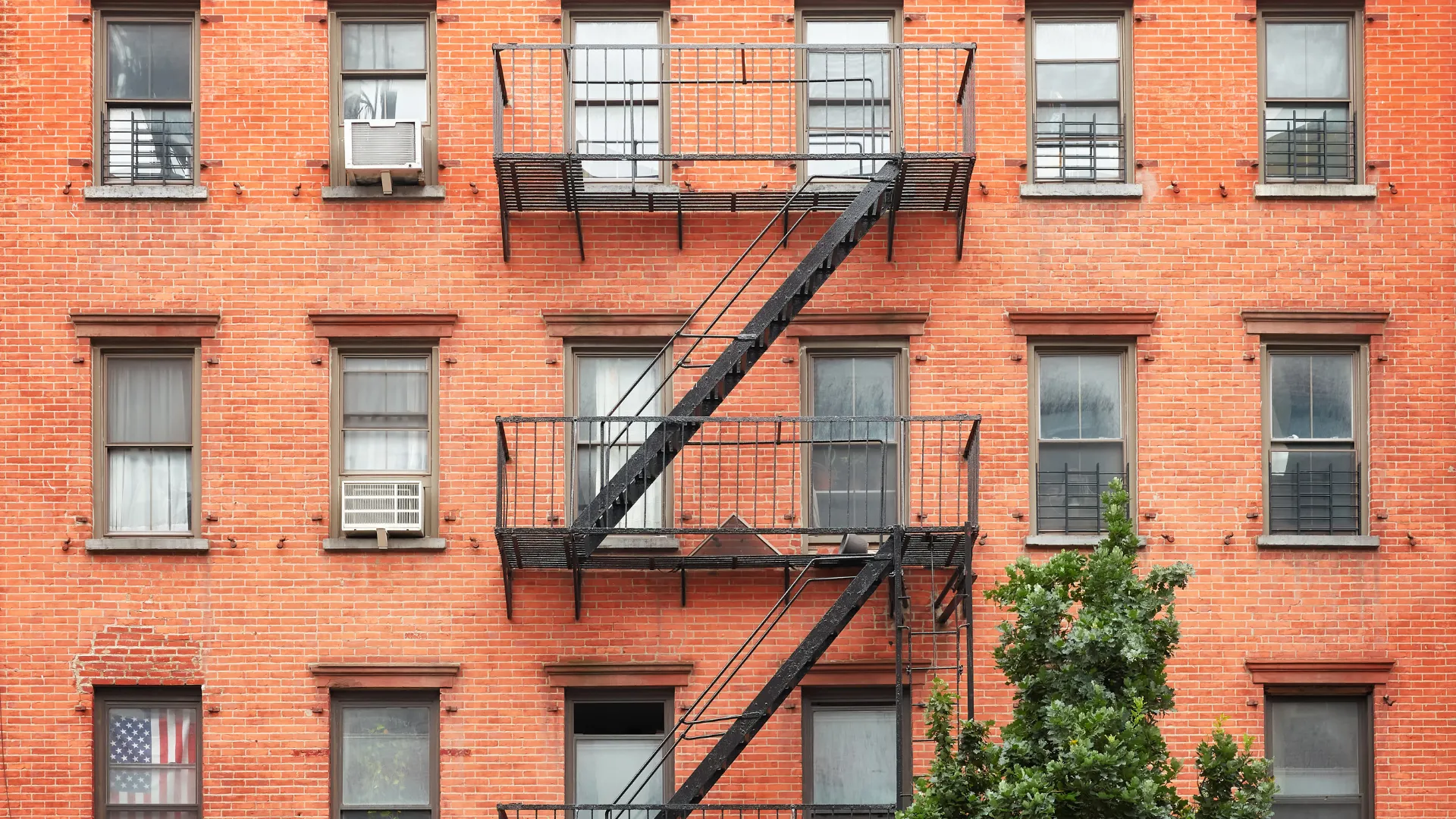
We rebuild, reinforce, or replace every part of the fire escape structure to restore strength and meet current DOB and LPC requirements.
Below is a breakdown of the exact restoration work our experts perform on each section
Replacement and Restoration of main load-bearing members that support the platforms and stairs.
Installation of new open-bar grating that meets load requirements and matches historic patterns where required.
Railings restoration to 42-inch height with spacing that meets DOB and LPC guidelines.
New machine bolts installation per 1 RCNY §15-10 and reseal wall penetrations.
Drop ladder operation restoration and worn pivot hardware replacement.
Rewelding of substandard welds and torque-testing of all bolted joints.
Bare metal cleaning, primer application, and two-coat finishing without rust encapsulation.
After restoration, owners receive a complete record for audit and resale protection:
Schedule a free structural assessment.
Yes, we phase restoration in controlled sections so occupants always retain a safe emergency egress path. We coordinate schedules with management, post clear notices, and install temporary safety measures to minimize disruption to daily operations.
Yes. Full restoration requires DOB permits before work begins and an official sign-off after completion. Our team prepares filings, schedules required inspections, meets inspectors onsite, and submits closeout documentation.
In many severe corrosion cases, we dismantle sections or entire runs to access hidden rust at connection points. It facilitates proper steel treatment, hardware replacement, and safe rebuilding of attachment points.
Most full fire escape restorations take 1 to 3 weeks, depending on the size of the structure, severity of corrosion, fabrication needs, and LPC approval (if required). Moreover, landmark review, custom iron replication, and weather conditions can also extend timelines slightly.
Restoration costs vary based on the number of platforms, stairs, corrosion level, fabrication required, and LPC compliance needs. We provide a free structural assessment and a detailed written estimate so you understand the full scope before work starts.
Yes. We can restore only the affected stack after inspection confirms the remaining sections are still structurally sound. This approach reduces costs while addressing corrosion that could lead to violations.
No, our experts fabricate replacement components to match original profiles, dimensions, and railing patterns. Our finish coatings also comply with LPC guidelines, ensuring the appearance remains consistent with the building’s architecture.
Restoration addresses root corrosion, replaces weakened components, and rebuilds connections with new hardware. You have long-term structural reliability and fewer compliance issues over the years.
ask what you want to ask
NYC Fire Escape Painting is a licensed contractor providing fire escape repair, restoration, and violation correction across NYC. We are known for fast response, code-compliant work, and documented inspection support.
Quick Links
Contact Info