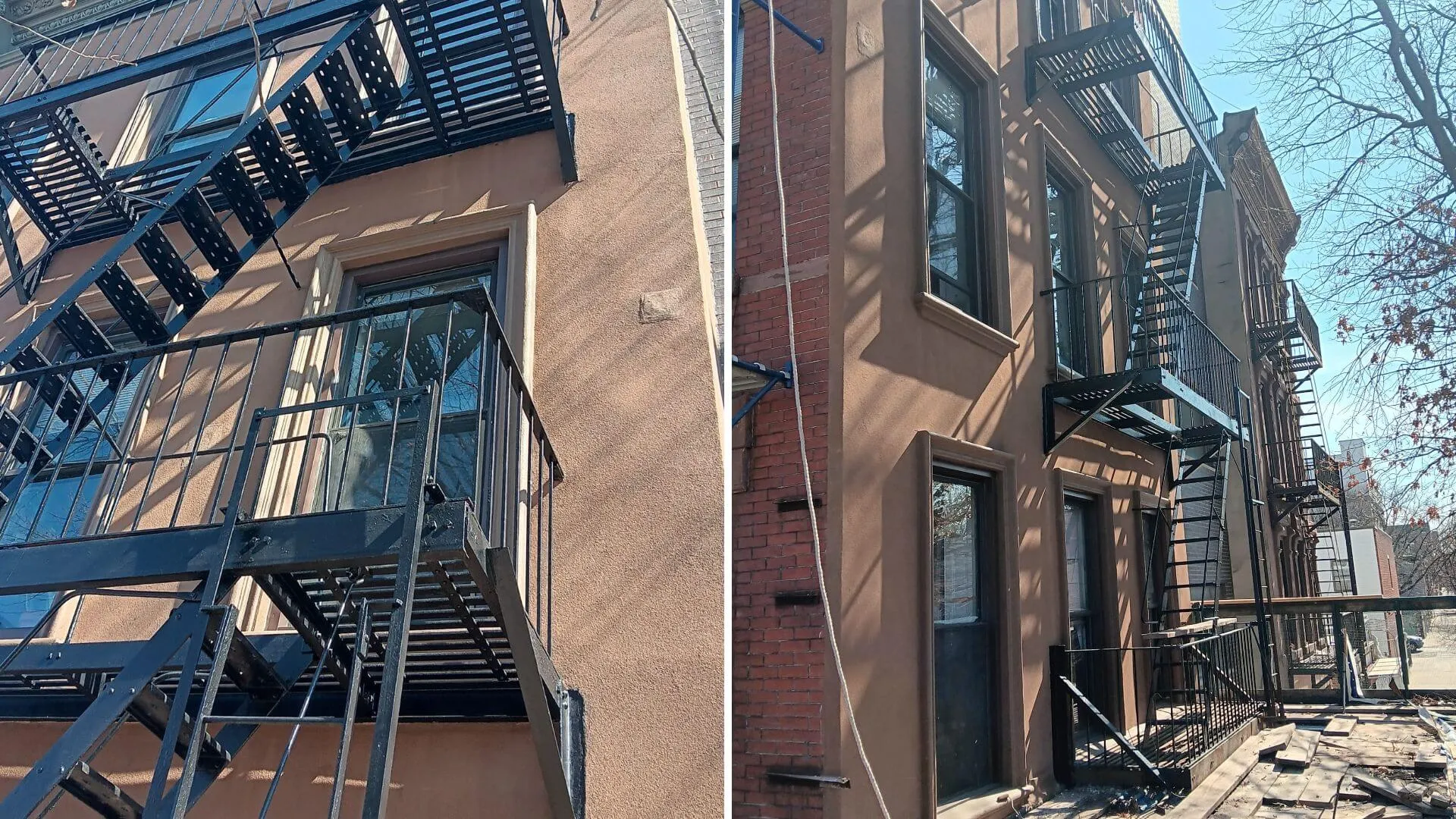
Protect your building before rusted fire escapes turn into DOB violations, FISP problems, or failed inspections.
We provide same-day inspections, lead-safe repairs, LPC coordination, and fixed-fee restoration for brownstones, walk-ups, co-ops, and landmark buildings from West 110th to West 155th.
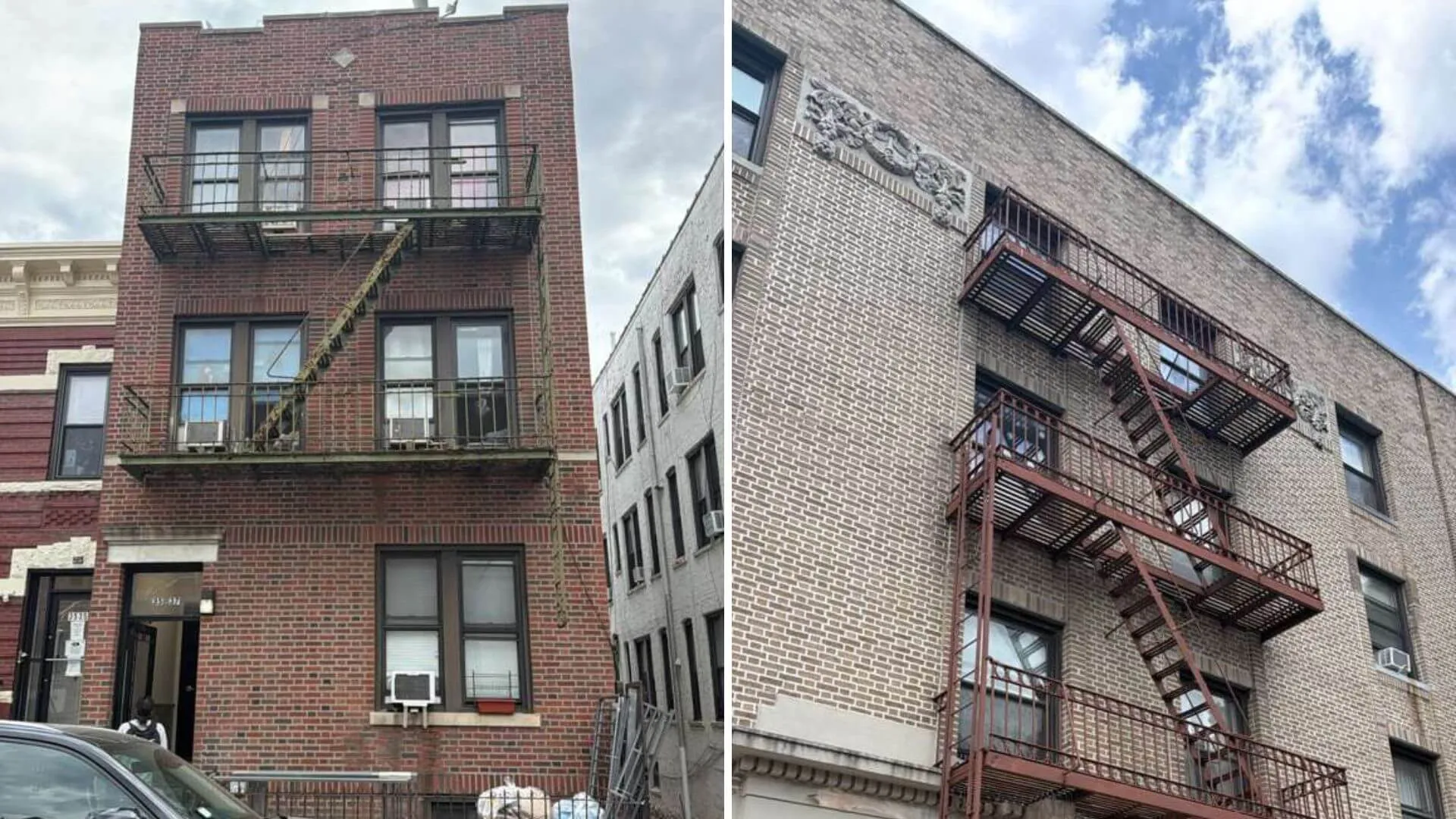
Get your work done across all six Harlem zip codes: 10026, 10027, 10030, 10031, 10037, and 10039, and throughout Manhattan Community Districts 9, 10, and 11.
NYC Fire Escapes Painting’s crews work on brownstones in Mount Morris Park, walk-ups along Edgecombe Avenue, landmark townhouses in Strivers’ Row, and pre-war apartment buildings on Adam Clayton Powell Jr. Boulevard.
Moreover, we navigate the regulatory layers you deal with daily, including NYC DOB, FDNY, FISP / Local Law 11, NYC Building Code 27-371, 1 RCNY 15-10, NYC Admin Code 28-302, Multiple Dwelling Law 53, LPC 2-22, and EPA RRP lead-safe requirements for pre-1978 paint disturbance.
We provide a complete service stack built around Harlem’s pre-war buildings and landmark districts.
Full scrape-prime-paint restoration using rust-inhibitive primer and weather-resistant coatings designed for NYC exposure. We use EPA RRP-compliant wet-method surface preparation on pre-1978 buildings and coordinate LPC-approved colors.
Hunter green and charcoal black remain common choices throughout historic districts.
Tread replacement, railing reinforcement, anchorage tightening, drop-ladder restoration, and fabrication of damaged structural components. We preserve original wrought iron profiles to maintain the historic character of Harlem.
Historic systems preservation instead of unnecessary replacement. We restore deteriorated wrought iron and cast iron assemblies through AWS-certified welding, reinforcement, structural stabilization, and complete repainting while maintaining LPC-compliant historic detail.
Problem identification before a QEWI documents them during a FISP critical examination. These early inspections play a vital part in preventing SWARMP findings and reducing emergency repair costs later.
AWS-certified structural welding on rusted stringers, cracked anchorages, damaged treads, and failing connections. We use landmark-sensitive repair methods that preserve historic façades throughout Hamilton Heights, Sugar Hill, and Mount Morris Park.
When an original fire escape becomes structurally unsalvageable, we design replacement systems that comply with NYC Building Code 27-371, Multiple Dwelling Law 53, DOB requirements, and LPC standards for landmark buildings.
Immediate coordination with your QWEI when your buildings are flagged SWARMP or UNSAFE during FISP inspections. We complete the repair scope, support the re-inspection process, and assist with amended filings through DOB NOW.
Open Class 1 DOB violations delay sales, refinancing, and permit approvals. We correct the physical condition, file the AEU2 Certificate of Correction, and help remove the violation from BIS records so transactions proceed cleanly.
At NYC Fire Escape Painting, our teams regularly work on brownstones along West 122nd Street, Convent Avenue, Hamilton Terrace, Edgecombe Avenue, West 138th Street, and Frederick Douglass Boulevard, where original wrought iron systems remain attached to late-19th-century masonry.
Being in the field for 2+ decades, we understand that improper welding, oversized replacement steel, or careless grinding can permanently damage brownstone façades and trigger LPC violations, hence, we avoid them at all costs.
Speak to our team today for careful anchorage work and historically appropriate restoration methods.
Same-day or next-day site visit with condition photography and landmark review.
Evaluation of lead paint, treads, anchorages, railings, stringers, and drop ladders.
Written pricing with defined scope, timeline, and LPC coordination details if needed.
DOB permits and LPC 2-22 applications management
EPA RRP-compliant containment, wet-method prep, AWS-certified welding, and protective coatings.
Project photos, welder certifications, AEU2 filings, and FISP support documentation.
We work continuously and understand the neighborhood's historic districts, streets, building stock, and compliance requirements.
Lead-safe practices during paint disturbance, our crews follow EPA RRP protocols on every project.
Structural welding on century-old wrought iron and cast iron requires specialized experience and certified craftsmanship.
Regular coordination of landmark applications for buildings throughout Mount Morris Park, Hamilton Heights, Sugar Hill, and Strivers' Row.
Painting, repair, welding, permits, LPC filing, FISP coordination, and violation removal all stay under one roof.
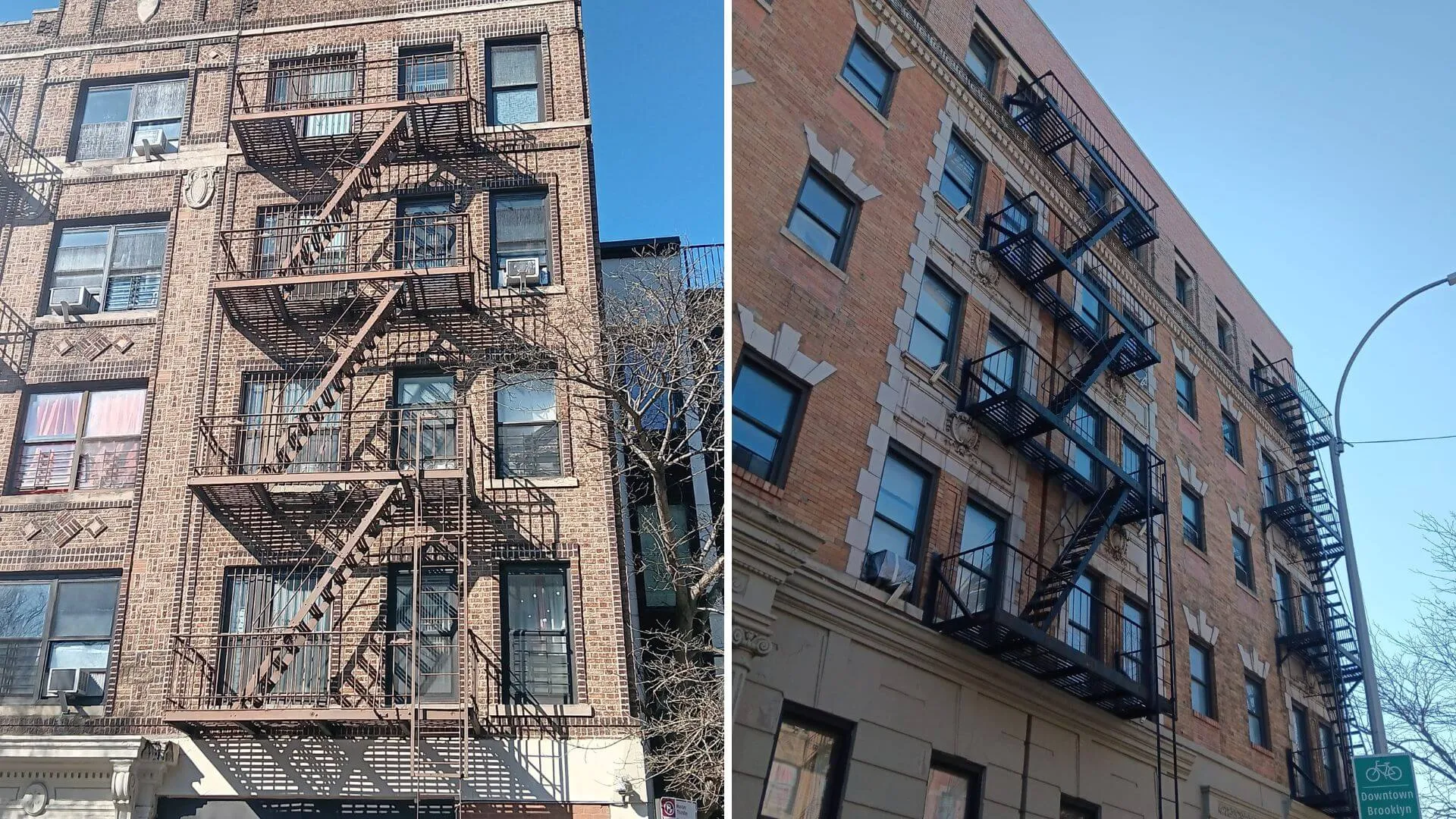
The area consists of multiple distinct neighborhoods with different architectural styles, historic overlays, and fire-escape conditions. We work throughout all of them.
We provide same-day site visits in Harlem and fixed-price repair estimates.
Mount Morris Park, Hamilton Heights, Sugar Hill, Strivers' Row, Dorrance Brooks Square, and Central Harlem West 130th–132nd Streets Historic Districts commonly require LPC review before repainting or altering fire escapes.
A Certificate of No Effect covers work with minimal visual impact on landmark features. On the contrary, a permit for Minor Work applies to visible alterations and changes affecting the fire escape appearance or materials.
Yes, but not without LPC and DOB approval because landmark buildings require preserving original fire escapes unless you prove an alternate code-compliant means of egress already exists.
Most Harlem brownstone fire escape painting projects take two to five days, considering rust conditions, lead-paint containment requirements, building height, weather, and if structural repairs or welding are necessary.
Yes, you should notify tenants in advance because fire escape work affects window access, emergency egress, noise levels, and temporary scaffold or containment setup around occupied apartments.
No, painting alone will not resolve structural defects. You need proper rust removal, protective coating, and repairs before inspection to help prevent SWARMP or UNSAFE findings on deteriorated fire escapes.
ask what you want to ask
NYC Fire Escape Painting is a licensed contractor providing fire escape repair, restoration, and violation correction across NYC. We are known for fast response, code-compliant work, and documented inspection support.
Quick Links
Contact Info