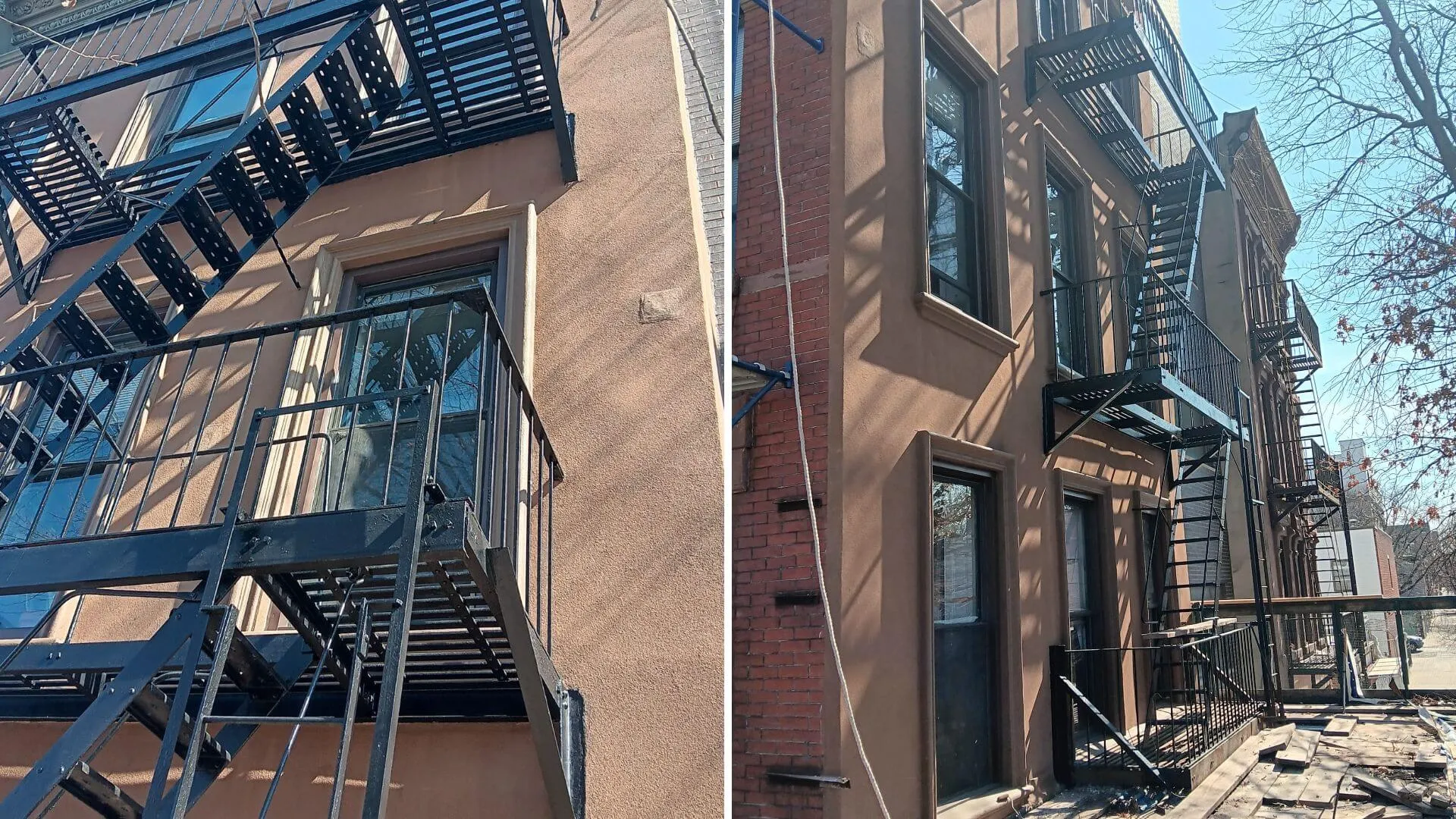
Upper West Side buildings deal with both LPC landmark rules and DOB/FISP deadlines. At NYC Fire Escapes Painting, we help co-op boards, condo managing agents, and brownstone owners keep fire escapes safe, compliant, and inspection-ready. Every scope arrives as a board-ready proposal that addresses your QEWI’s SWARMP, UNSAFE findings and your LPC landmark requirements in a single package.
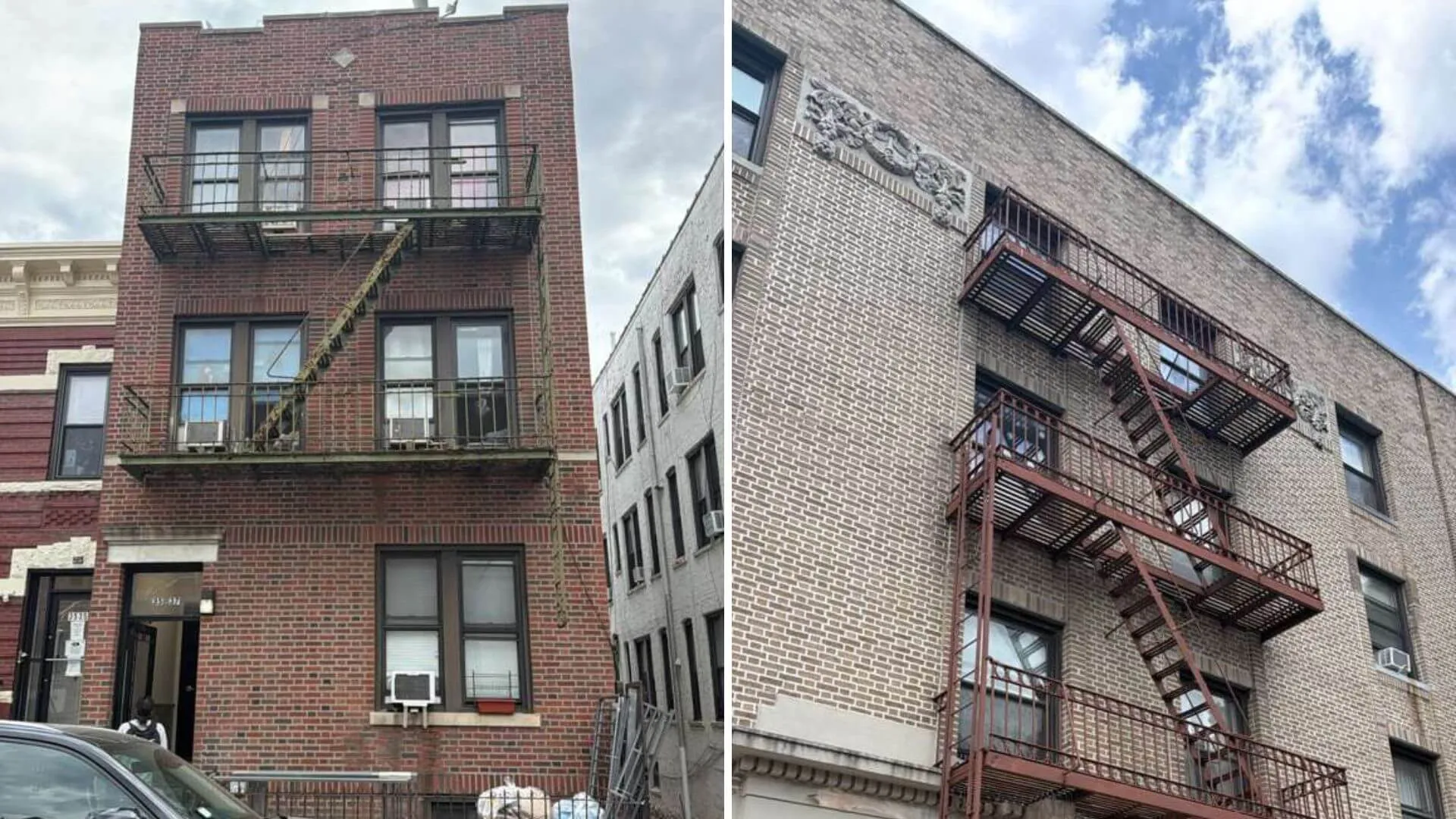
We’re a NYC DOB-licensed contractor working mostly on Upper West Side pre-war buildings. From classic co-ops on Central Park West and West End Avenue to Riverside Drive townhouses and Lincoln Square mid-rises, we deliver:
We handle NYC’s full compliance framework daily, including DOB and FDNY requirements, FISP (Local Law 11), LPC filings, and EPA RRP lead-safe standards, along with all related construction codes and housing regulations.
The Upper West Side holds the highest concentration of 1900–1930 luxury elevator buildings in NYC. Because we understand the specific regulatory and architectural profile of this neighborhood, we don’t treat your building like a generic job.
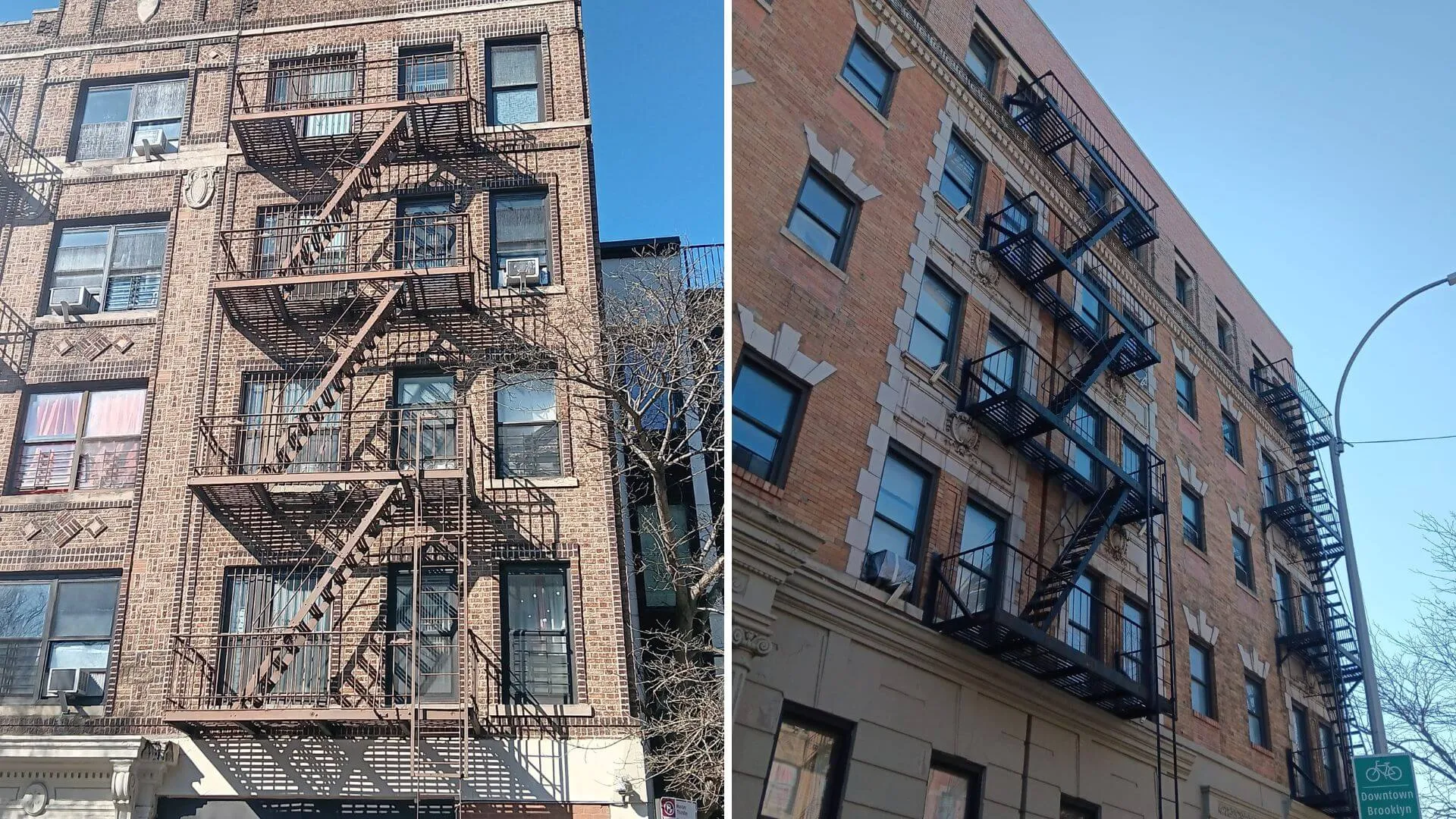
Most UWS elevator buildings are 8–20 stories, placing them under mandatory FISP (Local Law 11) scrutiny. We specialize in the complex rear-facade fire escapes that define this era of architecture.
Unlike standard townhouses, UWS fire escapes often hang off narrow interior light-wells. We handle specialized swing-stage and suspended scaffold setups via DOB NOW: Build as a matter of routine, ensuring we reach the work without disturbing your residents.
With eight designated historic districts, even a routine repainting project requires a Certificate of No Effect (CNE) or a Permit for Minor Work (PMW). We handle the LPC portal filings so you don't have to navigate the bureaucracy.
We preserve the integrity of your building's original Beaux-Arts, Italian Renaissance Revival, and Art Deco ironwork. We prioritize restoration and period-accurate welding over generic steel replacement, maintaining the historic character of your façade.
Since nearly all UWS pre-war structures pre-date 1978, we operate under mandatory EPA RRP-compliant wet-method removal. We use high-performance containment systems to ensure zero dust migration in dense residential corridors.
We usually prepare filings for staff-level approval (CNE or PMW) when the scope allows.
We clear Class 1 and Class 2 violations using DOB NOW: Safety. We correct the condition, supply AWS welder certifications and labeled photographic evidence, and file the AEU2 Certificate of Correction with its AEU20 supporting affidavit. We follow the filing through DOB NOW until it’s officially closed out.
Share your FISP report or RFP with us. We conduct a site walk with your superintendent the same day to verify conditions. You receive a fixed-fee, board-ready proposal with a Certificate of Insurance, ready for your next board meeting.
Yes, if the building is within a designated historic district. In most cases, we handle a Certificate of No Effect (CNE) submission so the work can proceed without delays, usually approved within 2 to 4 weeks when it qualifies for staff-level review.
Pre-war luxury architects moved them to rear light-wells to preserve the street-facing ornamental facade. We specialize in these tight-access rigging scenarios.
We are EPA RRP-certified and utilize mandatory wet-method containment to prevent dust migration.
Yes. We perform the work and file AEU2/AEU20 through DOB NOW: Safety, ensuring you remain eligible for penalty waivers.
We conduct a fixed-fee proposal after a site walk. Each project is priced individually based on site conditions, access, and compliance requirements.
Routine maintenance takes 3 to 5 days. Structural restoration takes 2–4 weeks. If the project requires an LPC filing, we factor in their 2 to 8 week review window so you have a clear completion date.
We use a low-impact approach for occupied co-ops. Our team works externally via swing stages, so we rarely need apartment access. We provide your staff with pre-written notification memos and coordinate all schedules to minimize resident complaints.
ask what you want to ask
NYC Fire Escape Painting is a licensed contractor providing fire escape repair, restoration, and violation correction across NYC. We are known for fast response, code-compliant work, and documented inspection support.
Quick Links
Contact Info